The discipline

Freerunning

Parkour's creative cousin — the same foundations, expressed as flow, style, and self-expression.

The basics

What is freerunning?

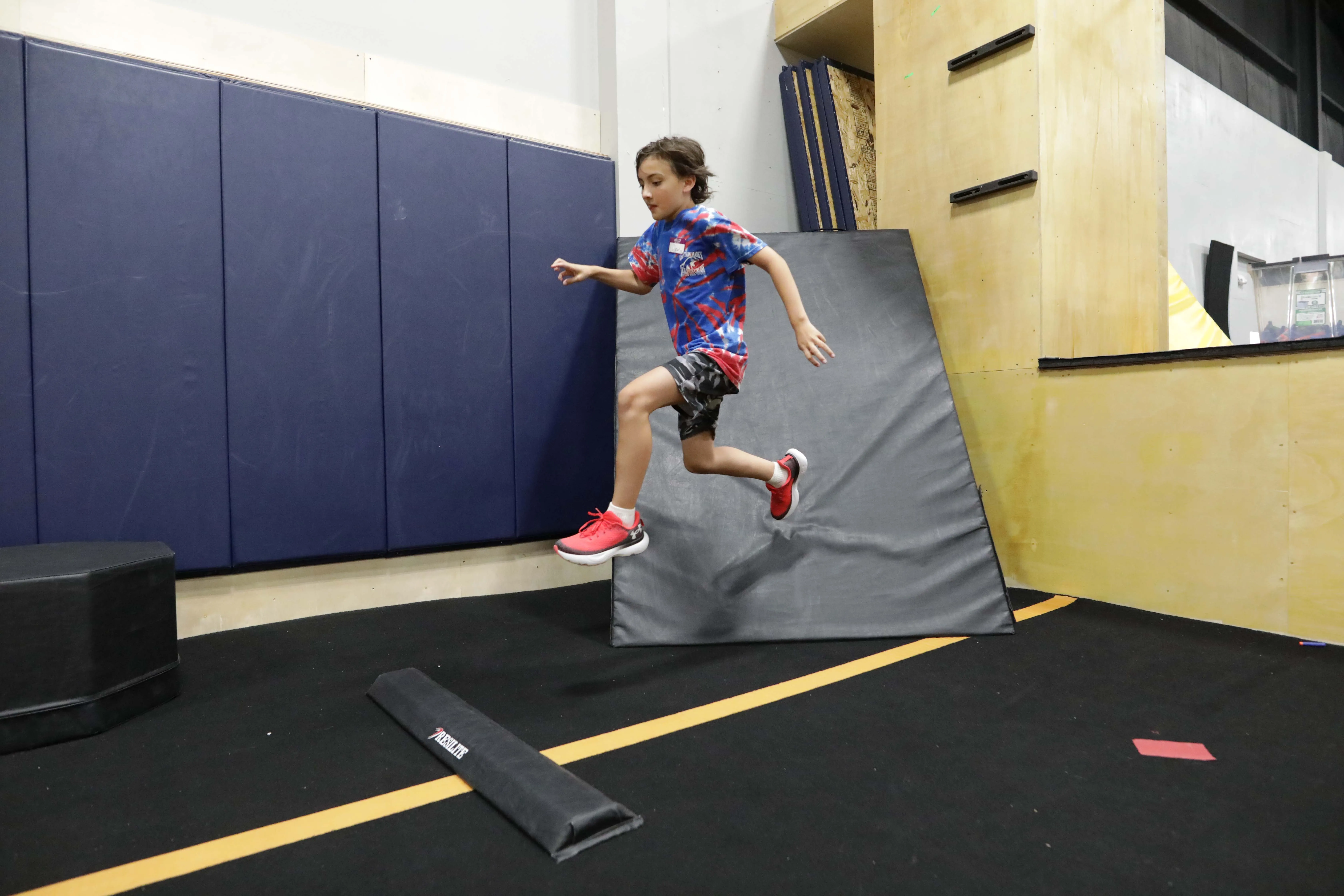
Freerunning takes the movement vocabulary of parkour — vaults, jumps, wall work, and landings — and adds creativity, acrobatics, and personal style. Where parkour asks “what's the most efficient way through?”, freerunning asks “what's the most expressive way?”

Flips, spins, and tricks all live here, linked together into flow. It's the artistic side of movement: two athletes can face the same obstacle and answer it in completely different ways, and both are right. That freedom is exactly the point.

Where it came from

A short history

Freerunning was named in the early 2000s by Sébastien Foucan, one of parkour's original practitioners. As the discipline spread, Foucan wanted a word that emphasized freedom, artistry, and individual expression over pure efficiency.

The term reached a wide audience through the 2003 documentary Jump London, and freerunning has grown alongside parkour ever since — two sides of the same movement. Today it has its own thriving competition scene, but the heart of it is still personal: move in a way that's unmistakably yours.

What it's built on

The core ideas

Creative freedom

There's no single “right” way. Freerunning rewards imagination and personal choices.

Flow

Linking movements together so one flows seamlessly into the next — movement as a language.

Personal style

Your run should look like you. Athletes develop a signature way of moving over time.

Built on control

Flips and tricks only come once the fundamentals and safe landings are rock solid.

The HUB way

How we teach freerunning

Freerunning builds directly on parkour fundamentals. Before anyone adds a flip, we make sure the basics — safe landings, body control, and strength — are solid. From there, coaches introduce tricks and combinations in careful progressions.

We use mats and a foam pit so athletes can push their creativity with a soft place to land, learning new moves the safe way. It's challenging and a huge confidence builder — and it's a blast to watch a kid land something they've been chasing for weeks.

Who it's for

For the expressive mover

Youth and teens especially gravitate to freerunning — it's expressive, social, and endlessly rewarding. It works best once an athlete has a base of parkour fundamentals to build on, which is exactly why we teach the two together. Start with parkour, and freerunning is where a lot of athletes fall in love with the sport.

Ready to find your flow?

See class timesBook a first class