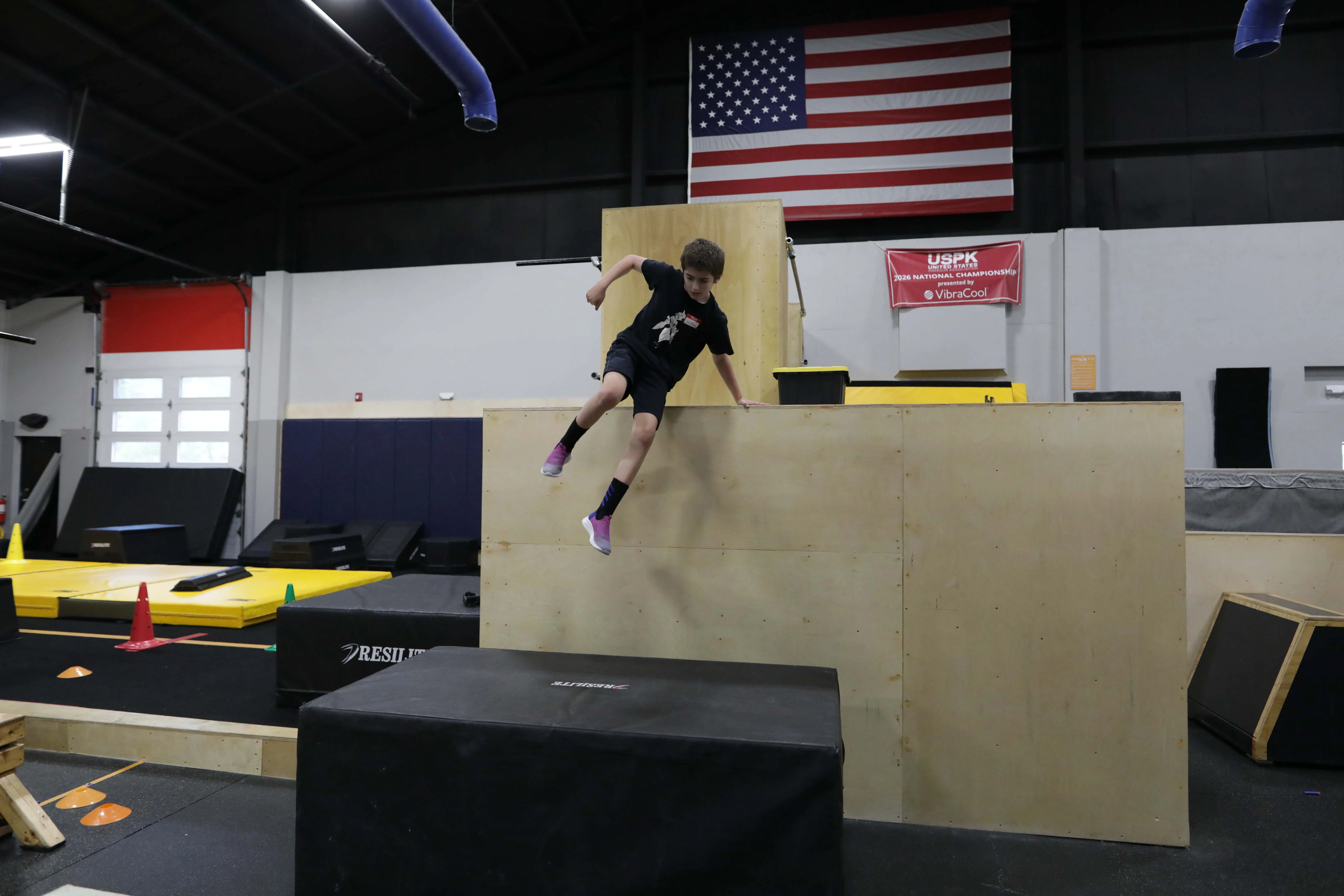
What is parkour?
Getting from one place to another using only your body: running, jumping, vaulting, climbing, balancing and landing. At HUB we teach it to ages 4 to adult.
- Born in France, 1990s
- No experience needed
- Sudbury and Norfolk
Movement as problem-solving.
Parkour athletes, called traceurs, look at a wall, a rail or a gap and work out the cleanest way through it. It is about steady self-improvement, not showing off.
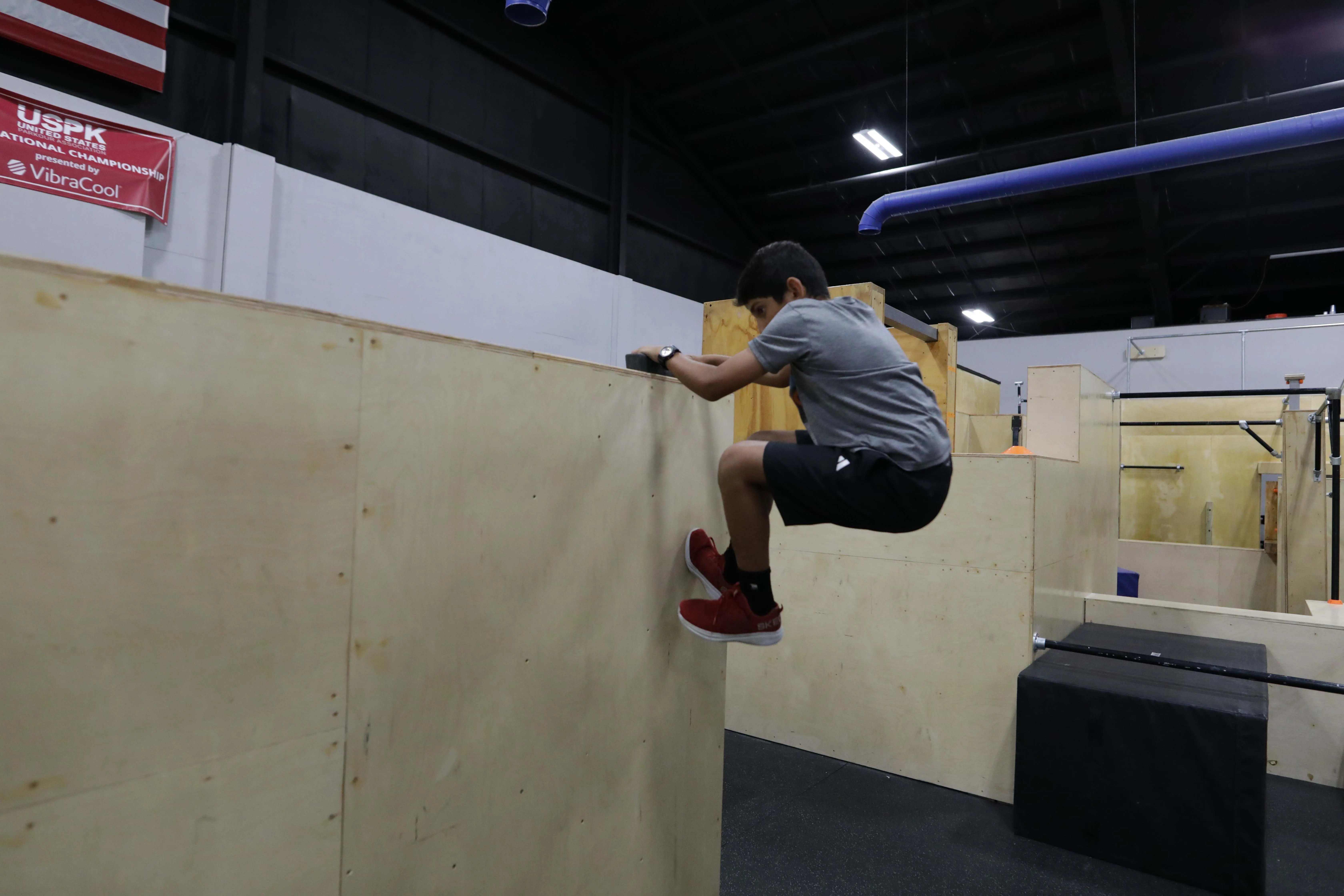
The skills are simple to name and take years to master: precision jumps, vaults, wall runs, climb-ups and safe landings.
Every athlete moves at their own level, so a first-timer and a ten-year traceur can train on the same course.
A short history.
Parkour grew out of the Paris suburbs in the late 1980s and 1990s. David Belle and the group known as the Yamakasi built on Georges Hébert's natural method of physical training. Belle called it l'art du déplacement, the art of movement.
1900s
Hébert's natural method
Georges Hébert trains people with practical movements like running, climbing and jumping.
1980s
A father's influence
Raymond Belle's training philosophy inspires his son David, who develops the practice with friends in Lisses and Évry.
2000s
Parkour goes global
Films and early internet videos carry parkour around the world.
Today
Gyms, schools and competition
Parkour lives outdoors, in gyms like HUB and in competitions, with personal progress still at its center.
The core ideas.
Efficiency
Move smoothly and with purpose, without wasted energy or needless risk.
Control
Safe landings, rolls and falls come before anything bigger.
Adaptability
Read any obstacle and find your own line through it.
Progression
Small, steady gains add up to skills you couldn't do before.
How HUB teaches it.
Beginners start with landings, rolls, balance and basic vaults. Classes are small and coach-led, and coaches scale every drill so each athlete is challenged. Our five-band system gives athletes clear goals from White to Orange.
Anyone can start.
From four-year-olds in Lil Jumpers to adults starting from scratch. No strength, flexibility or experience needed.